Welcome to Professional Tooth Whitening

Teeth naturally change colour over time due to ageing, diet, lifestyle choices, or previous dental work. Professional tooth whitening is a considered, safe process that restores brightness and freshness to your smile — without creating an artificial or overly white appearance. The aim is enhancement, not exaggeration, so your smile still looks like you — just healthier and more refreshed.
A clinician-led approach places your safety and comfort at the centre of every decision. Before treatment begins, your clinician will assess your oral health, discuss your sensitivity history, and choose a method tailored to your individual needs and goals. This careful planning helps ensure the treatment is both effective and comfortable.
Professional whitening is not a one-size-fits-all cosmetic service. Tooth shade, enamel thickness, existing dental work, and sensitivity levels all influence the best approach. By understanding these factors, your clinician can guide you toward realistic, natural-looking results that suit your complexion and facial features.
This guide explains what to expect at every stage — from the initial assessment and treatment process to aftercare and long-term maintenance — so you feel informed, reassured, and confident throughout your whitening journey.
Key Principle: Professional whitening aims for a naturally brighter smile that complements your complexion and feels authentically you—not an extreme or artificial appearance.
Why Professional, Clinician-Led Treatment Matters
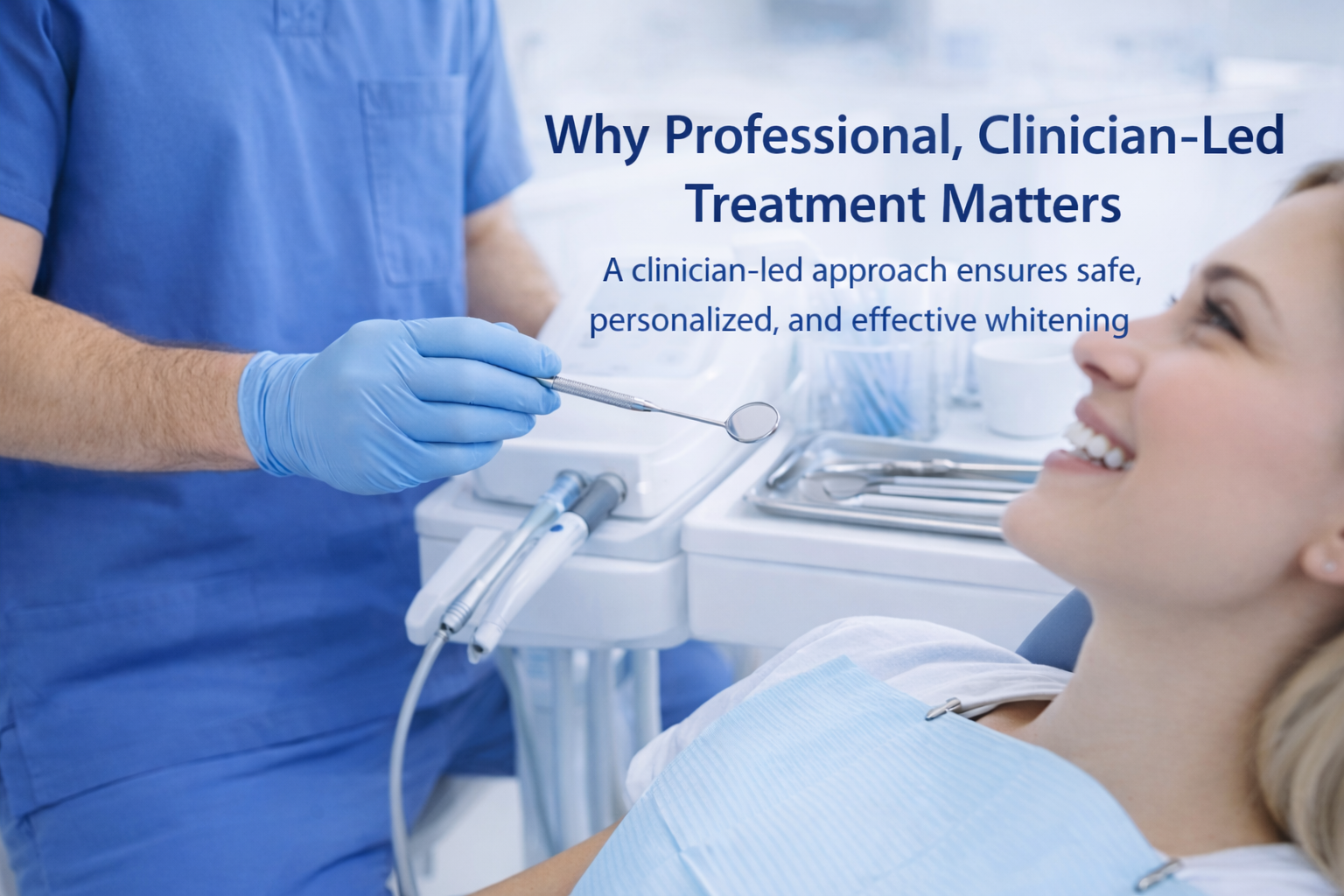
Whitening uses active chemical agents on living tissues, which is why professional oversight is important. A clinician's role has three core elements:
Safety First
Your clinician checks for untreated decay, gum inflammation, cracked teeth, or exposed roots that could make whitening uncomfortable or unsuitable. Any dental issues are addressed before whitening begins, protecting your long-term oral health.
Personalised Treatment
Rather than a one-size-fits-all approach, your clinician selects the right delivery method and gel strength for your individual needs. If you have a history of sensitive teeth, they can adapt timing and duration to minimise discomfort.
Real-Time Problem-Solving
During treatment, your clinician monitors your comfort and adjusts the protocol if needed. If sensitivity arises, they can pause, modify the approach, or recommend an alternative—flexibility that over-the-counter products cannot offer.
Realistic Expectations: Whitening does not affect existing dental restorations (crowns, veneers, fillings), and results vary from person to person. Your clinician helps you choose a shade that looks natural and flattering for your unique features.
How the Whitening Process Works
Understanding the steps of professional whitening reduces anxiety and helps you feel involved in your care. Here's what a typical clinician-led pathway includes:
1. Pre-treatment Clinical Assessment
Your clinician inspects your teeth and gums, discusses your dental history, and checks for decay, cracks, exposed roots, or significant restorations. If any dental issues need attention first, they explain the sequence of care and why each step matters.
2. Baseline Shade Documentation and Photographs
A standardised shade assessment using a shade guide or digital tool is recorded, and photographs are taken. These serve as a visual baseline for comparison and help calibrate realistic expectations for the outcome.
3. Treatment Planning and Consent
Your clinician discusses possible approaches—in-clinic treatment, custom take-home trays, or low-sensitivity protocols—and explains benefits and limitations. Informed consent is obtained for your chosen plan, including clear information on likely outcomes and aftercare responsibilities.
4. Soft Tissue Protection
Barrier materials and retractors protect your gums and lips, ensuring the whitening agent contacts only tooth surfaces. This reduces the risk of irritation and contributes to more even, professional results.
5. Application and Monitoring
Whitening gel is applied in measured amounts. Your clinician may use light activation or allow the gel to work chemically, depending on the protocol. Throughout, your comfort is monitored, and the approach is adjusted if needed.
6. Post-Treatment Review
After the active phase, your teeth are rinsed, and the clinician reviews results and comfort. Clear instructions for the next 24–72 hours are provided, including what to avoid, sensitivity management, and any prescribed products.
7. Ongoing Maintenance Planning
Most patients benefit from a maintenance plan. Your clinician outlines timelines for follow-up appointments and advises on lifestyle choices that prolong results, such as reducing staining habits and maintaining good oral hygiene.
Who Is a Good Candidate for Whitening
Professional tooth whitening is suitable for most adults with healthy teeth and gums who wish to improve the natural colour of their smile. However, certain situations require special consideration:
- Good candidates: Adults with generally healthy teeth and gums, no untreated decay, and realistic expectations about outcomes.
- May need preparatory care: Those with extensive visible restorations, untreated dental disease, or severe enamel defects. Your clinician will outline the best pathway forward.
- Special considerations: Pregnant and breastfeeding patients typically defer whitening as a precaution; discuss timing with your clinician if relevant.
Pre-treatment Check Essential: A dental assessment before whitening ensures there are no issues that would make treatment inappropriate or uncomfortable. Any necessary preparatory care is completed first, followed by a safe timeline for whitening.
Treatment Options and What to Expect
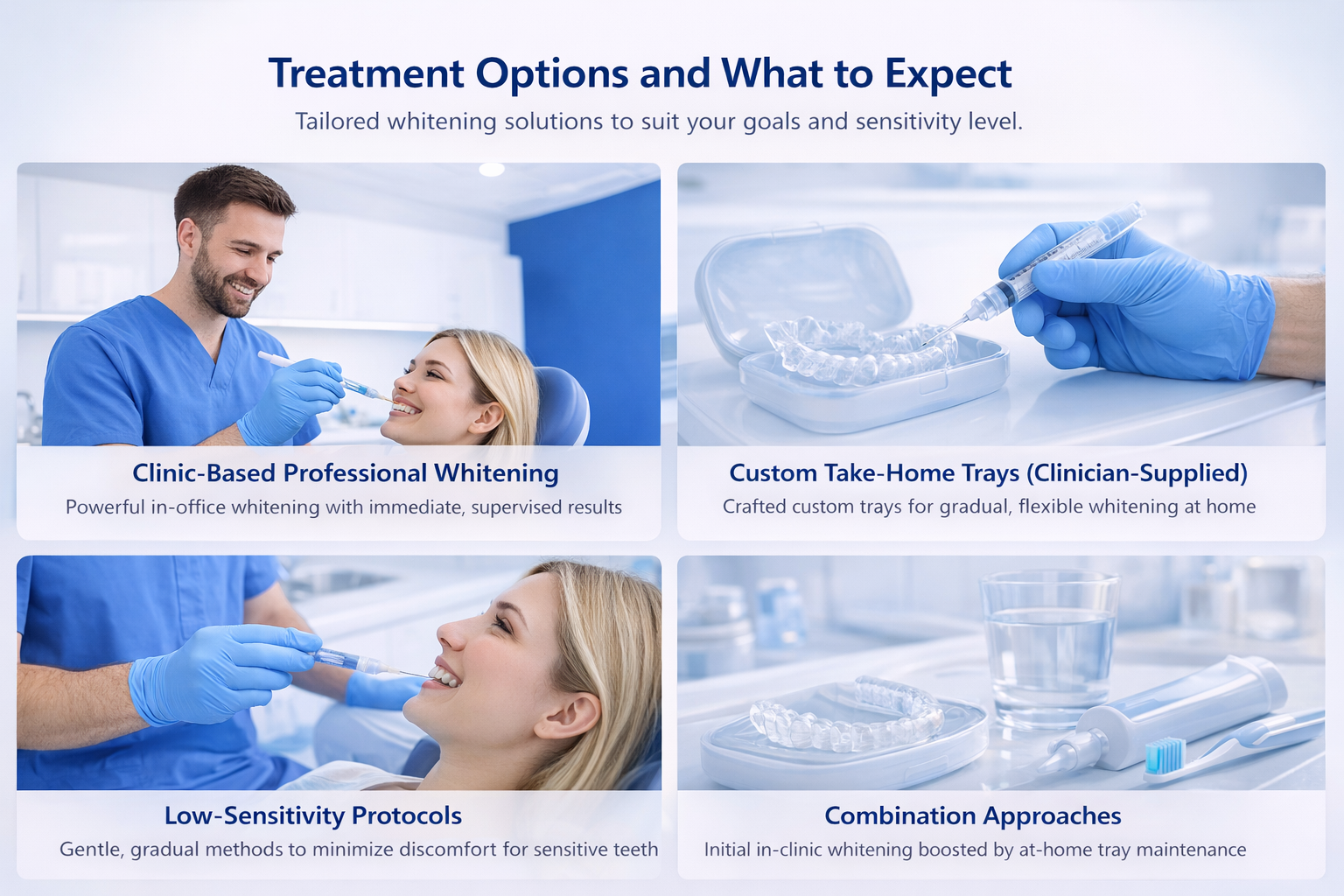
There is no single "best" whitening method; the most suitable option depends on your goals, starting shade, sensitivity profile, and lifestyle. Your clinician will discuss these options with you:
Clinic-Based Professional Whitening
Higher-concentration gels are applied under direct clinician supervision, often across one or multiple visits depending on the protocol and your tolerance. This approach offers speed and immediate oversight: visible improvements can be achieved quickly, and your clinician adapts the method if sensitivity arises. The trade-off is that higher potency may increase short-term sensitivity, which clinicians mitigate using protective measures and shorter application cycles.
Because the process is monitored in real time, adjustments can be made at every stage to keep you comfortable while still progressing toward your desired shade. This controlled clinical setting also ensures even application and consistent results, supporting a brighter smile achieved safely and professionally.
Custom Take-Home Trays (Clinician-Supplied)
Custom trays are made from impressions or digital scans and filled with a clinician-prescribed gel for at-home use. This method suits patients who prefer gradual control or have mild sensitivity. The trays ensure even gel distribution and reduce excess gel contacting soft tissues. Your clinician provides a clear schedule — for example, nightly use for a set number of days — and monitors progress through follow-up appointments. This approach is gentler and offers flexibility for long-term maintenance.
Because treatment happens over several days, changes appear gradually, which many people find more comfortable and natural-looking. It also allows you to pause or adjust timing if needed, making it a practical option for maintaining brightness over time.
Low-Sensitivity Protocols
For sensitivity-prone patients, clinicians may choose lower concentrations, shorter in-chair cycles, desensitising pre-treatment applications, or longer but lower-dose tray protocols. Desensitising toothpastes and topical products may be recommended as part of the regimen to deliver shade improvement while minimising discomfort.For sensitivity-prone patients, clinicians may choose lower concentrations, shorter in-chair cycles, desensitising pre-treatment applications, or longer but lower-dose tray protocols. Desensitising toothpastes and topical products may be recommended as part of the regimen to deliver shade improvement while minimising discomfort.
This tailored approach allows whitening to progress at a pace your teeth can comfortably tolerate, rather than pushing for rapid change. By focusing on comfort and gradual improvement, clinicians help ensure the experience remains manageable while still achieving a noticeable, natural-looking result.
Combination Approaches
Some patients benefit from a hybrid strategy: an initial in-clinic session to jump-start results, followed by custom tray maintenance at home. This balances rapid initial improvement with the gentleness and longevity of tray-based upkeep.
This approach allows you to see an early visible change while still maintaining control and comfort over the following weeks. It also supports more stable, longer-lasting results, as gradual top-ups help preserve brightness without placing unnecessary stress on sensitive teeth.
Realistic Results and Expectations
Professional whitening offers meaningful cosmetic enhancement, but it's important to understand both what it achieves and what it cannot. Results depend on your natural tooth structure, existing shade, and lifestyle habits, so improvements vary from person to person. While whitening can noticeably reduce staining and refresh the appearance of your smile, it works within the limits of your natural enamel and will not change the colour of dental restorations such as crowns or fillings.
What Whitening Typically Achieves
- Reduction of surface and internal discolouration: Leading to a fresher, cleaner appearance.
- Improved confidence: Without creating an artificial or unnatural look.
- Measurable documentation: Shade guides and before/after photographs provide objective evidence of change.
What Whitening Does Not Do
- Change restoration colour: Existing crowns, veneers, fillings, and composite restorations remain unchanged in colour. If these are visible in your smile and you desire a harmonised appearance, they may need to be replaced after whitening—a decision discussed and planned carefully with your clinician.
- Fully correct all stains: Some stains caused by certain medications (such as tetracycline) or severe intrinsic discolouration may not respond completely to whitening.
- Address structural issues: Chips, fractures, or extensive wear require restorative care, not whitening.
Duration of Results
How long whitening lasts varies by lifestyle and maintenance. For many people, the most noticeable improvement lasts 6–24 months. Those who avoid staining habits and use periodic top-ups can extend results substantially. Regular hygiene appointments and mindful habits—rinsing after staining foods, using straws for dark drinks, avoiding habitual sipping—help preserve brightness.
Safety and Professional Standards
Professional whitening is considered low-risk in appropriate candidates when applied by a trained clinician. However, there are important considerations to understand:
Common, Minor Effects
- Transient sensitivity: The most common effect. Usually mild and resolves within days. Clinicians use protective measures and shorter cycles to reduce this.
- Gum irritation: Typically due to poor isolation. Clinician-applied barriers minimise this risk significantly.
- Uneven results: If restorations or large fillings are present in the smile, some areas may respond differently to whitening.
Less Common Concerns
- Prolonged sensitivity: In rare cases, may require pausing treatment and exploring alternatives.
- Allergic reactions: Rare but possible. Any history of allergies should be disclosed during assessment.
Does Whitening Damage Enamel?
There is no robust evidence that professionally supervised whitening damages enamel when used correctly. Some temporary changes in surface texture have been observed, but enamel integrity is preserved with proper clinical protocols. The primary risk for damage is unsupervised or excessive use of high-concentration products. Clinicians aim to protect enamel through measured exposure and appropriate follow-up care.
Safety Measures Clinicians Take
- Thorough pre-treatment assessment and detailed record-keeping.
- Use of appropriate isolation and protective barriers.
- Tailoring gel concentration and exposure time to individual needs.
- Monitoring comfort throughout treatment and adapting as needed.
- Clear post-treatment advice and scheduled follow-up checks.
Aftercare and Maintaining Results
Care after whitening involves both immediate steps to protect the result and longer-term habits to maintain brightness.
Immediate Aftercare (First 24–72 Hours)
- Avoid highly pigmented foods and drinks: Freshly whitened enamel is more receptive to staining immediately after treatment. Limit coffee, tea, red wine, beetroot, and curry for at least 24–48 hours.
- Use gentle oral care: A soft-bristled toothbrush and non-abrasive toothpaste are essential. If sensitivity occurs, switch to a desensitising toothpaste and follow your clinician's advice.
- Avoid smoking and acidic foods: These increase sensitivity and staining in the short term.
- Use prescribed products: If your clinician supplied desensitising gels or mouth rinses, use them exactly as instructed.
Managing Sensitivity
- Sensitivity is common and usually transient. Over-the-counter analgesics can help short-term if recommended by your clinician or pharmacist.
- Desensitising toothpastes with potassium nitrate reduce sensitivity when used daily.
- If sensitivity persists beyond a few days or is severe, contact your clinician for reassessment.
Long-Term Maintenance
- Good oral hygiene: Brushing twice daily and interdental cleaning reduce surface staining and prolong results.
- Periodic top-ups: Consider occasional touch-up treatments with clinician-supplied trays if you smoke or regularly consume staining beverages.
- Staining-minimising habits: Rinse with water after consuming staining foods or drinks, avoid habitual dark beverage sipping, and use straws for some drinks to reduce contact with front teeth.
- Regular clinical reviews: Periodic appointments allow your clinician to monitor shade stability and overall oral health.
Sustainability: Small, sustained changes in daily routines often preserve brighter results longer than one occasional intensive treatment. A consistent approach to maintenance is more effective than sporadic efforts.
Frequently Asked Questions
What is the difference between tooth whitening and tooth cleaning?
Tooth whitening uses chemical agents to change the shade of the natural tooth structure by breaking down pigmented molecules. Tooth cleaning (scale and polish) removes surface deposits, plaque, and extrinsic stains but does not change the internal colour of the tooth. A clinician often performs hygiene care before whitening to produce a cleaner surface so the whitening works more effectively. Whitening addresses deeper colour issues that cleaning alone cannot correct.
Is professional whitening safe?
Yes, when a clinician assesses suitability and applies a tailored protocol, whitening is considered safe for most patients. Safety depends on appropriate patient selection, careful use of products, and good isolation. Clinicians reduce the risk of adverse effects by adjusting concentrations, monitoring comfort, and providing follow-up care. If dental conditions are present, these are usually treated before whitening to maximise safety and minimise sensitivity.
How long do the results last?
Duration varies by lifestyle and maintenance. For many people, the most noticeable improvement lasts 6–24 months. Those who avoid staining habits and use periodic top-ups can extend results substantially. Regular hygiene appointments and mindful habits like rinsing after staining foods help preserve brightness. Your clinician can offer take-home maintenance trays that allow scheduled short top-ups to maintain shade.
Will whitening damage my enamel?
There is no robust evidence that professionally supervised whitening damages enamel when used correctly. Some temporary changes in surface texture have been observed, but enamel integrity is preserved with proper clinical protocols. The primary risk for damage is unsupervised or excessive use of high-concentration products. Clinicians aim to protect enamel through measured exposure and appropriate follow-up care.
Does whitening cause pain?
Most patients experience only mild, temporary sensitivity rather than pain. If sensitivity occurs, clinicians have strategies to reduce it: lower concentration gels, shorter cycles, desensitising products, or a switch to tray protocols. Severe or prolonged pain is uncommon; if it occurs, your clinician will reassess and may pause treatment or explore alternatives.
How long does an appointment take?
In-clinic sessions usually take between 45 minutes and 2 hours, covering assessment, protection, application cycles, and immediate review. Tray fitting appointments are typically 30–60 minutes; whitening at home occurs over days or weeks according to your clinician's schedule. Allow extra time for photographs and discussion so your clinician can explain outcomes and aftercare fully.
Can I whiten crowns, veneers, or fillings?
No, whitening agents do not change the colour of existing restorations. If restorations are in the visible smile, your clinician may recommend whitening first and, where necessary, replacing restorations to match the new shade. This sequence ensures a harmonious final appearance, but should be discussed and planned carefully with your clinician.
Are there lifestyle limits after whitening?
Yes, for the first 24–72 hours, limiting strongly coloured foods and drinks and avoiding smoking helps protect the result. Long-term, reducing frequent consumption of staining substances and practising good oral hygiene will prolong the effect. Using a straw for certain drinks and rinsing after meals are practical tips to reduce staining.
Do I need a dental check before whitening?
Yes, a pre-treatment check ensures there are no issues that would make whitening inappropriate or uncomfortable. Your clinician will treat or advise on any necessary dental care first and then provide a safe timeline for whitening. This assessment is a critical safety step.
Patient Experiences and Perspectives
Real stories reflect the priorities patients often share: comfort, realistic expectations, and long-term thinking:
"I was worried about my teeth being too sensitive, but the clinician took time to explain a gentler plan and offered a step-by-step approach. We started with a single clinic session and then used custom trays at home. The result looks natural—just a cleaner, fresher smile—and sensitivity was minimal."
— A.P., UK
"I wanted to avoid an artificial look. The clinician helped choose a shade that suited my complexion and made sure any restorations were considered. The process felt collaborative and calm; the follow-up advice on maintenance made a real difference in keeping the result longer."
J.R., UK
"After years of coffee and tea stains, I wanted a reliable solution. The clinician explained both in-chair and tray options and recommended a hybrid plan. Photos before and after helped me see the change clearly. It felt like a medical procedure delivered with kindness and respect."
S.T., UK
Our Approach to Patient Care
Professional tooth whitening in clinical practice emphasises safety, personalisation, and respect for your individual priorities. Our approach is grounded in the following principles:
- Thorough assessment: We begin by checking your mouth to ensure whitening is safe for you. If dental needs are present, we treat those first.
- Natural results: Our aim is a natural, flattering shade—not an exaggerated or artificial appearance.
- Sensitivity management: If you are prone to sensitivity, we choose a gentler approach that protects your comfort without compromising results.
- Documentation and transparency: Photos before and after help us, and you, see the change clearly. We only take and use photos with your explicit permission.
- Ongoing support: We provide detailed aftercare advice and maintain follow-up contact to monitor your results and address any concerns.
Integrated Thinking: We view whitening not merely as a cosmetic procedure but as an integrated decision made in the context of your overall oral health and personal priorities.
Key Points to Remember
As you consider professional tooth whitening, keep these essentials in mind:
- Professional whitening is safe when performed by a trained clinician with appropriate assessment and personalised protocols.
- Results vary from person to person based on starting shade, lifestyle, and maintenance habits.
- Whitening does not affect existing restorations (crowns, fillings, veneers), which may need to be updated separately for a harmonised appearance.
- Short-term sensitivity is common and usually mild; your clinician has strategies to manage it.
- Long-term results depend on maintenance: good oral hygiene, avoiding staining habits, and periodic top-ups help preserve brightness.
- A pre-treatment dental assessment is essential to ensure any underlying issues are addressed before whitening begins.
- Your clinician's role is to balance effective shade improvement with your comfort and realistic expectations—creating a result that enhances your natural smile.
Final Thoughts
A brighter smile should still feel like your smile. Professional tooth whitening, delivered under clinical supervision, focuses on safely, comfortably, and naturally improving tooth brightness. The goal is not an extreme or artificial shade, but a fresh, healthy appearance that suits your face, your complexion, and your confidence.
If you are interested in learning more about whether professional whitening is right for you, your clinician is ready to discuss your goals, assess your suitability, and outline a personalised pathway forward. This journey is about restoring and enhancing what is authentically yours.